Events

Views Navigation

Event Views Navigation

Today
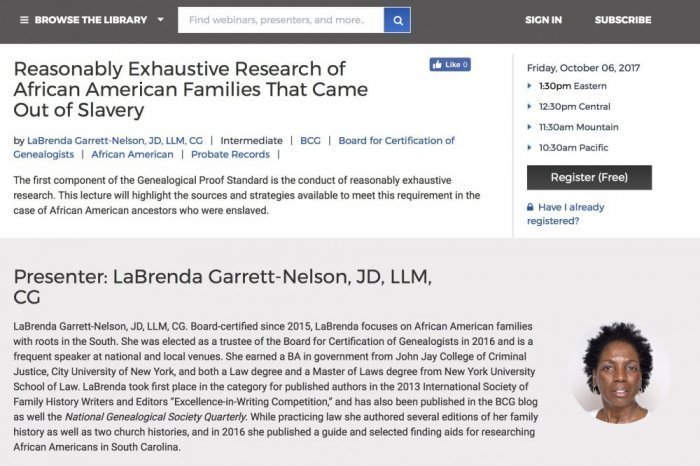
  • Researching African American Families That Came Out of Slavery

    Board for Certification of Genealogists

    The first component of the Genealogical Proof Standard is the conduct of reasonably exhaustive research. This lecture will highlight the sources and strategies available to meet this requirement in the case of African American ancestors who were enslaved.
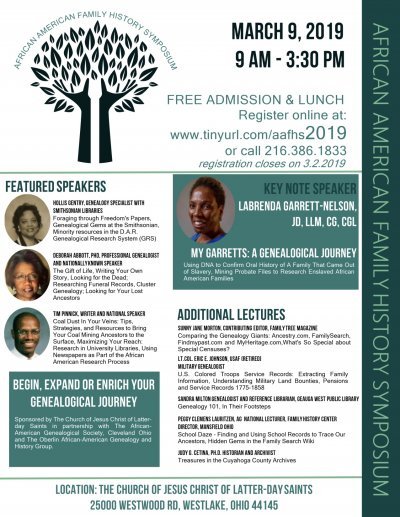
  • My Garretts: A Genealogical Journey

    African American Family History Symposium

    Using DNA to confirm oral history of a family that came out of slavery. Mining probate files to research enslaved African American families.

  • Using DNA to Identify Enslaved Ancestors

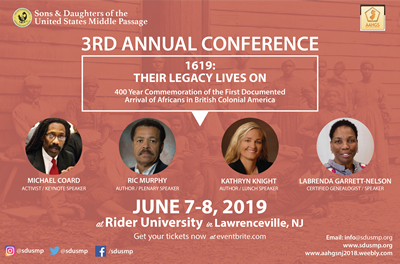
    Sons & Daughters of the United States Middle Passage.

    This presentation introduces basic concepts and special considerations relevant to using DNA to identify enslaved ancestors in the antebellum period.

  • Transcribing Documents: There Is More Than Meets the Eye

    Utah Genealogical Association

    The first component of the Genealogical Proof Standard is the conduct of reasonably exhaustive research, preferably using original records. Especially for periods before the 20th century, the emphasis on original sources will require the transcription of handwritten records as the first step in analyzing a record's content. Using a variety of documents, this course will cover selected Genealogy Standards, including those relating to the accuracy, completeness, and analysis of background context of a document.

  • 2020 Salt Lake Institute of Genealogy

    Genealogical Implications of Slavery's History Becoming American: A Deeper Look at Immigration & Naturalization Records and Their Laws A Hypothesized Enslaved African American Couple – The Garrett Case Planning Research Narrative Genealogies, Lineages, Pedigrees Measuring Yourself Against Standards – BCG Certification

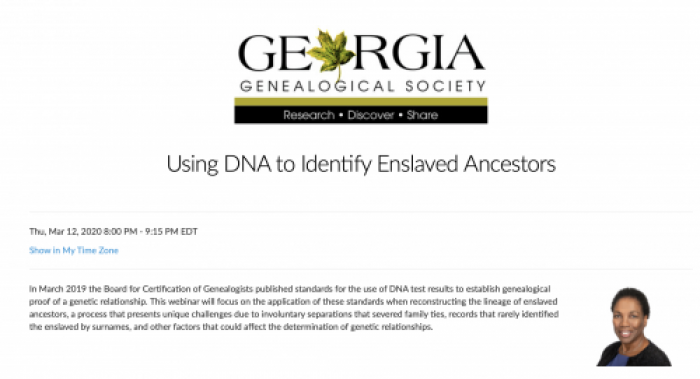
  • Using DNA to Identify Enslaved Ancestors

    Georgia Genealogical Society

    This webinar will focus on the application of DNA standards for using test results to establish genealogical proof of a genetic relationship when reconstructing the lineage of enslaved ancestors, a process that presents unique challenges due to involuntary separations that severed family ties, records that rarely identified the enslaved by surnames, and other factors that could affect the determination of genetic relationships.

  • DNA Corroborates Oral Tradition About the Parents of a Freedman

    This lecture is a part of the free Webinar Weekends with FamilyTreewebinars. The entire weekend is devoted to African American research. To participate, register for the live introductory webinar at www.FamilyTreeWebinars.com/June which will give you instructions for viewing the classes.