Events

Views Navigation

Event Views Navigation

Today
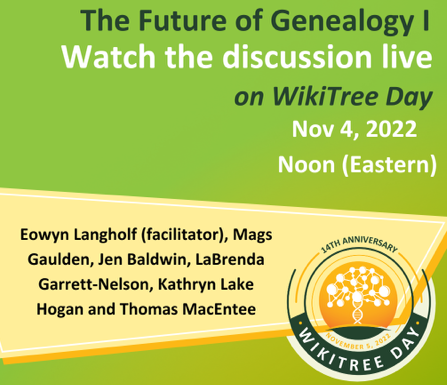
  • The Future of Genealogy

    WikiTree

    This panel will be discussing the future of genealogy - what we might look forward to, what might be some pitfalls and what best practices we might want to include. Panelists include: Eowyn Langholf (facilitator), Mags Gaulden, Jen Baldwin, Kathryn Lake Hogan, LaBrenda Garrett-Nelson and Thomas MacEntee.

  • An NGSQ Case Study: DNA Corroborates Oral Tradition

    Florida Genealogical Society – Tampa PO Box 18624, Tampa, FL, United States

    This lecture is based on a case study that was the lead article in the June 2020 edition of the National Genealogical Society Quarterly. The speaker will provide information needed to make sound decisions on when DNA tests can or should be used in genealogical research, and how to meet the DNA-specific genealogy standards for accuracy and completeness. The lecture will include an overview of available direct-to-consumer tests, a discussion of the elements of a targeted testing plan, and information about analyzing DNA test results.

  • Michigan Genealogical Conference Fall Seminar

    Michigan Genealogical Council

    Planning Research: The development of a sound research plan is the first step in the thorough research required by the Genealogy Proof Standard. Strengthen Your Analysis: Fundamentals of Transcribing and Abstracting The ability to craft transcriptions and abstracts is an essential skill that is needed to accurately interpret handwritten records. Meeting Standards for Narrative Genealogies, Lineages, and Pedigrees: An understanding of generally accepted formatting options is helpful in presenting information about family relationships and successive generations. An NGSQ Case Study: DNA Corroborates Oral Tradition: The case study that won the NGSQ 2020 Award for Excellence illustrated the information needed to make sound decisions on when DNA tests can or should be used in genealogical research, and how to meet DNA-specific Genealogy Standards.

  • African American Genealogy Methods and Strategies

    Salt Lake Institute of Genealogy

    This course is designed to be a skillbuilding experience that will take researchers to the next level by focusing on both methodologies and strategies for meeting the Genealogical Proof Standard when researching families that survived slavery. In-class exercises and a focus on case studies will arm students with the conceptual tools needed to overcome the challenges of researching during the antebellum period.

  • Using Cluster Research to Identify Enslaved Parents

    Online

    Cluster research of family, associates, and neighbors (the "FAN Club") is particularly useful when researching the lineage of a formerly enslaved ancestor. This session will focus on the indirect evidence that can be gleaned from a research subject's Fan Club, using sources created before and after the subject's lifetime.

  • Incorporating DNA Evidence Into a Proof Argument

    Online

    This session will follow the lecture regarding cluster research, to demonstrate how a proof argument based largely on indirect evidence can be strengthened by the incorporation of DNA evidence.

  • Antebellum Emancipations and Free People of Color

    Rootstech

    Two of the foremost educators in the area of African American Genealogy will present a joint lecture focused on ancestors who were emancipated before chattel slavery was finally abolished: LaBrenda Garrett-Nelson JD, LLM, CG®, FASG will lead off with a focus on the ways in which enslaved people could be manumitted before the abolition of chattel slavery, and Dr. Deborah A. Abbott PhD will follow-up with the treatment of Free People of Color in the period leading to the Civil War.

  • State and County Courts

    Rootstech

    LaBrenda Garrett-Nelson, JD, LLM, CG®, FASG, will cover antebellum court records that are among the most useful sources of genealogically relevant information about African American ancestors, including the organizational structures of the state and local courts that these ancestors—enslaved and free—typically came into contact with as well as the records created.

  • Descendant Communities Social Innovation Lab

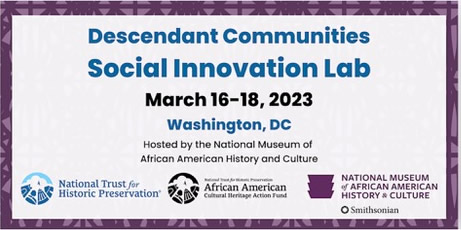
    The National Museum of African American History & Culture and the African American Cultural Heritage Action Fund of the National Trust for Historic Preservation are hosting the Descendant Community Social Innovation Lab. This event will convene descendants of slavery who are stakeholders of various types of culturally significant historic places, sites, battlefields and cemeteries for 3 days of empowerment, education, and organizing. This event will take place from Thursday, March 16 to Saturday, March 18, in Washington, DC with the first events beginning at noon on Thursday, and concluding officially on Saturday evening. LaBrenda will be on the "Researching enslaved ancestors” panel.